

24. Stiftssaal
24. Stiftssaal
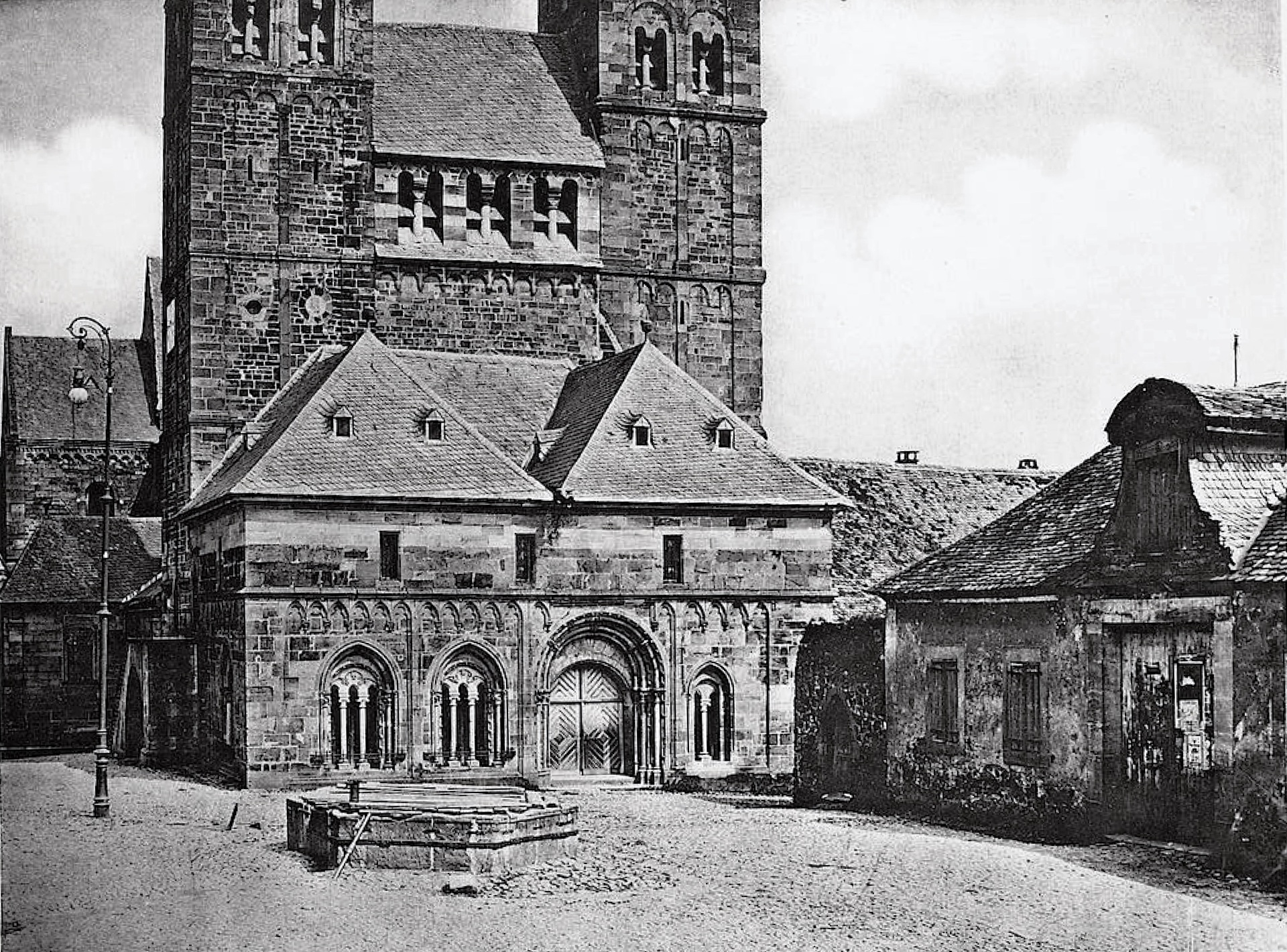
Stiftssaal 1909
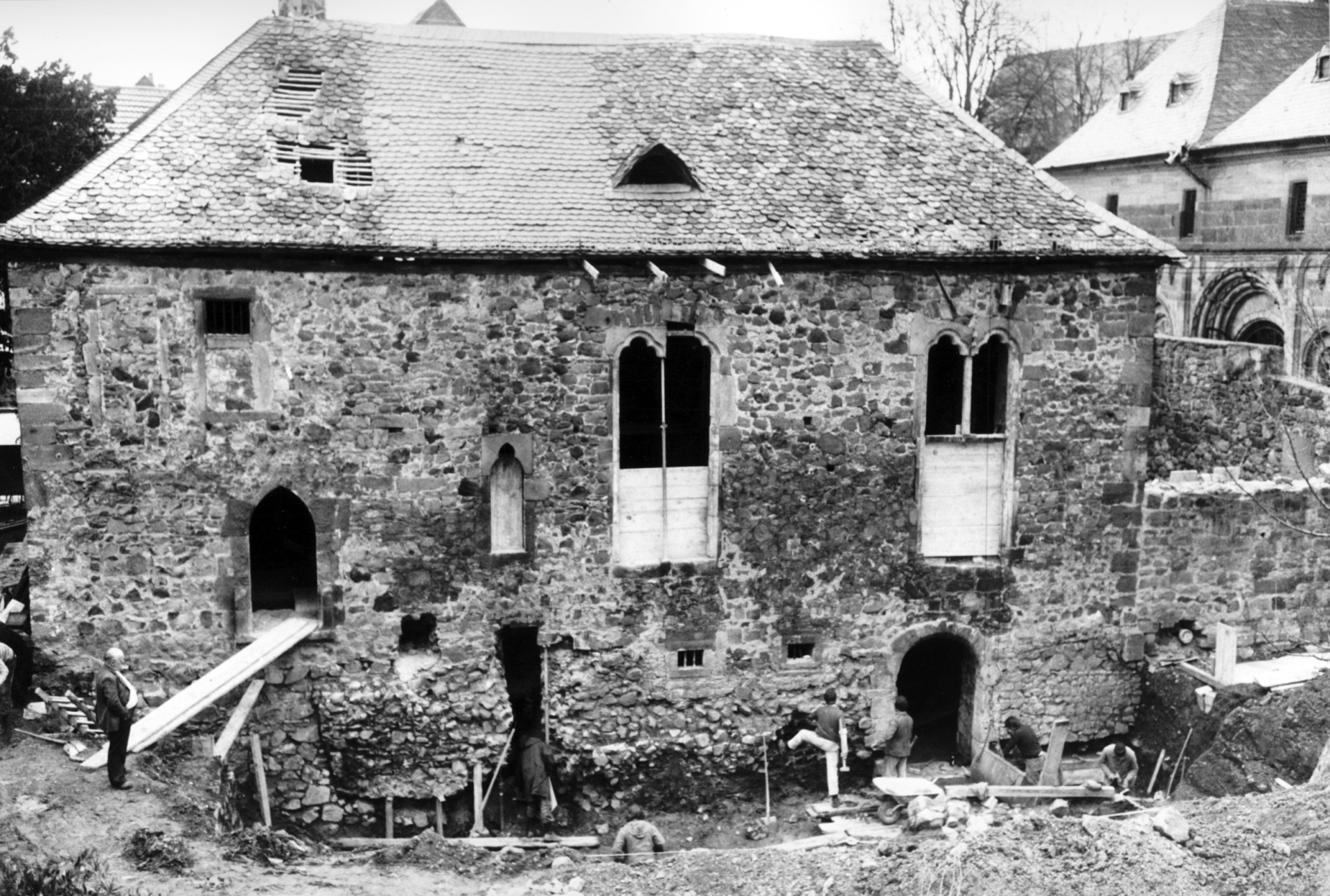
Stiftssaal 1979
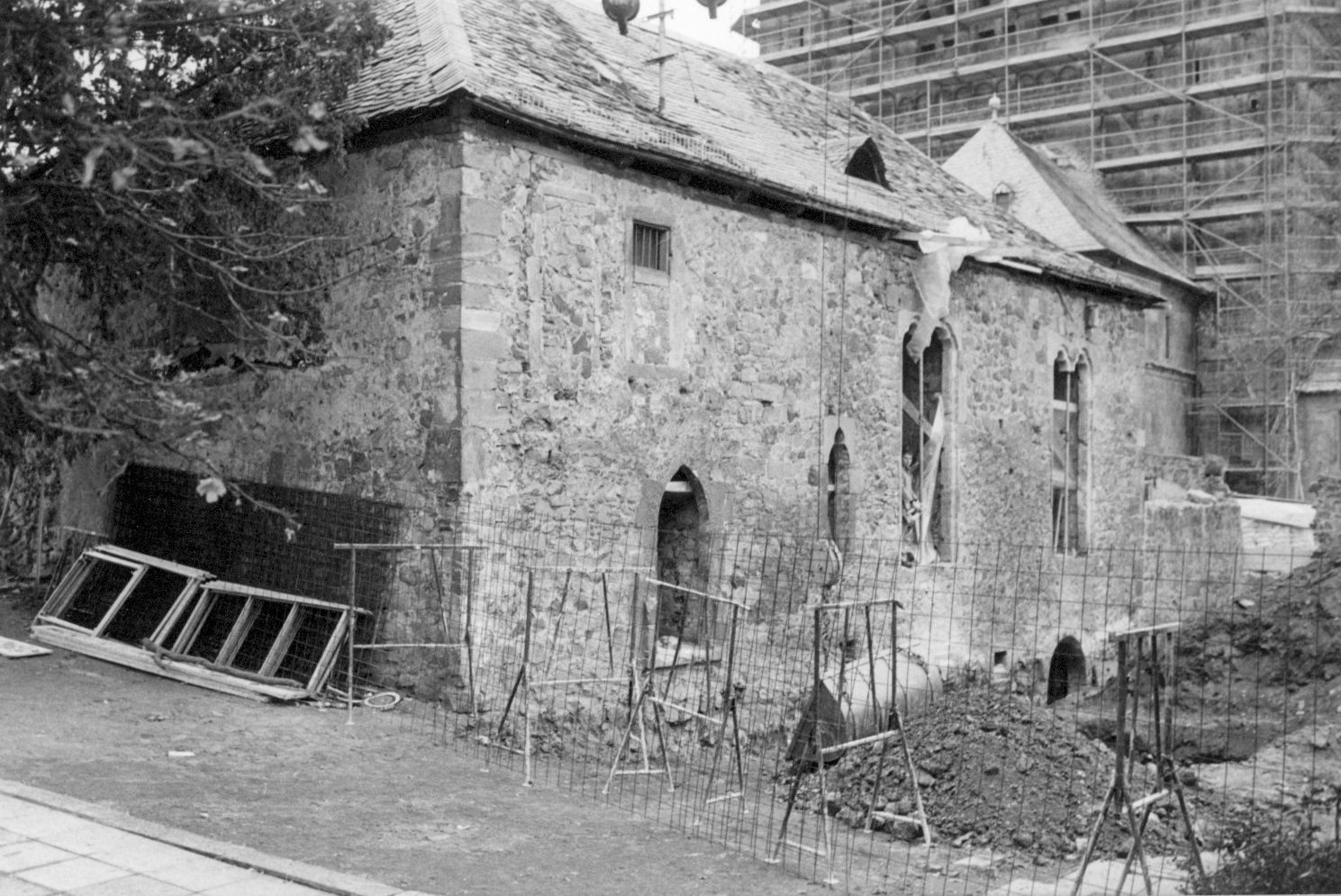
Stiftssaal 1979
Bitte wählen Sie Ihre Sprache / Please choose your language







Auf einem romanischen Keller wurde nach 1232 ein gotisches Gebäude errichtet. Bis 1540 „Geistiges Haus“, Kapitelstube und Stiftssaal. Später auch Zehntscheune und daher im Volksmund „Alte Waage“ genannt. Im 18. Jahrhundert Errichtung der barocken Fassade und des Dachstuhles. 1978-1980 saniert, seitdem Gemeindesaal (Stiftssaal und Stiftskeller). Das Chorherrenstift St. Peter war von etwa 1000 bis 1803 Stätte geistigen Lebens in Hessen. An der Stiftsschule wurden Theologie, Sprachen, Jurisprudenz, Medizin und die schönen Künste gelehrt. Zeugnis geben die Handschriften des Stiftes und die Werke sakraler Kunst im Domschatz.

In this place a Gothic building was erected on a Romanesque cellar after 1232. Until 1540 known as the "Spiritual House", combining chapter house and monastery hall. Later this was also called "Zehntscheune" (i.e. tithe barn, the storage for the local tithe) and because of the great scale that was in use there, widely known as "Alte Waage" (i.e. “The Old Scale”). The construction of its baroque façade and the roof truss dates from the 18th century. From 1978 to 1980 renovated, since then a community hall (Abbey Hall and Abbey cellar). From about 1000 to 1803, the canons' convent of St. Peter’s was a place of spiritual life and academic studies in Hesse. Before the first universities were founded, divinity, languages, jurisprudence, medicine and the fine arts were taught at monastery schools like this one. The manuscripts of the monastery and the works of sacred art in the cathedral treasure bear witness to this.

Op een Romaanse kelder werd na 1232 een gotisch gebouw opgetrokken. Tot 1540 "Geestelijk Huis", kapittelzaal en kapittelzaal. Later ook een tiendschuur en daarom in de volksmond bekend als de "Alte Waage". De barokke gevel en het dakgebinte werden in de 18e eeuw gebouwd. Gerenoveerd 1978-1980, sindsdien een gemeenschapshuis (Stiftssaal en Stiftskeller). De Sint-Pietersabdij was van ongeveer 1000 tot 1803 een plaats van geestelijk leven in Hessen. In de abdijschool werden theologie, talen, rechtsgeleerdheid, geneeskunde en schone kunsten onderwezen. De manuscripten van het klooster en de sacrale kunstwerken in de schatkamer van de kathedraal getuigen hiervan.

Après 1232 un bâtiment style gothique fut construit au-dessus d’une cave romaine. Jusqu’à 1540 il servait de « maison spirituelle », lieu de réunion des ecclésiastiques et salle collégiale, plus tard de grange pour le dixième, de là appelée « Vieille Balance » par les habitants. Au 18e siècle on y a construit la façade baroque et la charpente. Rénové dans les années 1978- 1980, le bâtiment sert de salle paroissiale (salle collégiale et cave). Le chœur Saint Pierre était d’environ l’an 1000 jusqu’à l’an 1803 lieu de la vie spirituelle de la Hesse. A son école on enseignait la théologie, les langues, le droit, la médecine et les beaux arts. Les manuscrits du chœur et les œuvres d’art sacral dans le trésor de la cathédrale en attestent.

Dopo il 1232 fu eretto un edificio gotico su una cantina romanica. Fino al 1540 era "Casa spirituale", sala capitolare e sala collegiale. In seguito fu anche un granaio per le decime e quindi popolarmente conosciuto come "Alte Waage". La facciata barocca e la capriata del tetto furono costruite nel XVIII secolo. Ristrutturata nel 1978-1980, da allora è una sala parrocchiale (Stiftssaal e Stiftskeller). L'Abbazia di San Pietro fu un luogo di vita spirituale in Assia dall'anno 1000 al 1803 circa. Nella scuola abbaziale si insegnavano teologia, lingue, giurisprudenza, medicina e belle arti. I manoscritti del monastero e le opere d'arte sacra nel tesoro della cattedrale ne sono la testimonianza.

Después de 1232 se construyó un edificio gótico sobre un sótano románico. Hasta 1540 fue «Casa Espiritual», sala capitular y sala colegial. Más tarde también granero de diezmos y por ello conocido popularmente como «Alte Waage». La fachada barroca y la armadura del tejado se construyeron en el siglo XVIII. Renovado entre 1978 y 1980, desde entonces es un salón parroquial (Stiftssaal y Stiftskeller). La abadía de San Pedro fue un lugar de vida espiritual en Hesse desde alrededor del año 1000 hasta 1803. En la escuela de la abadía se enseñaba teología, idiomas, jurisprudencia, medicina y bellas artes. Los manuscritos del monasterio y las obras de arte sacro del tesoro de la catedral así lo atestiguan.