

25. St.-Petri-Dom
25. St.-Petri-Dom
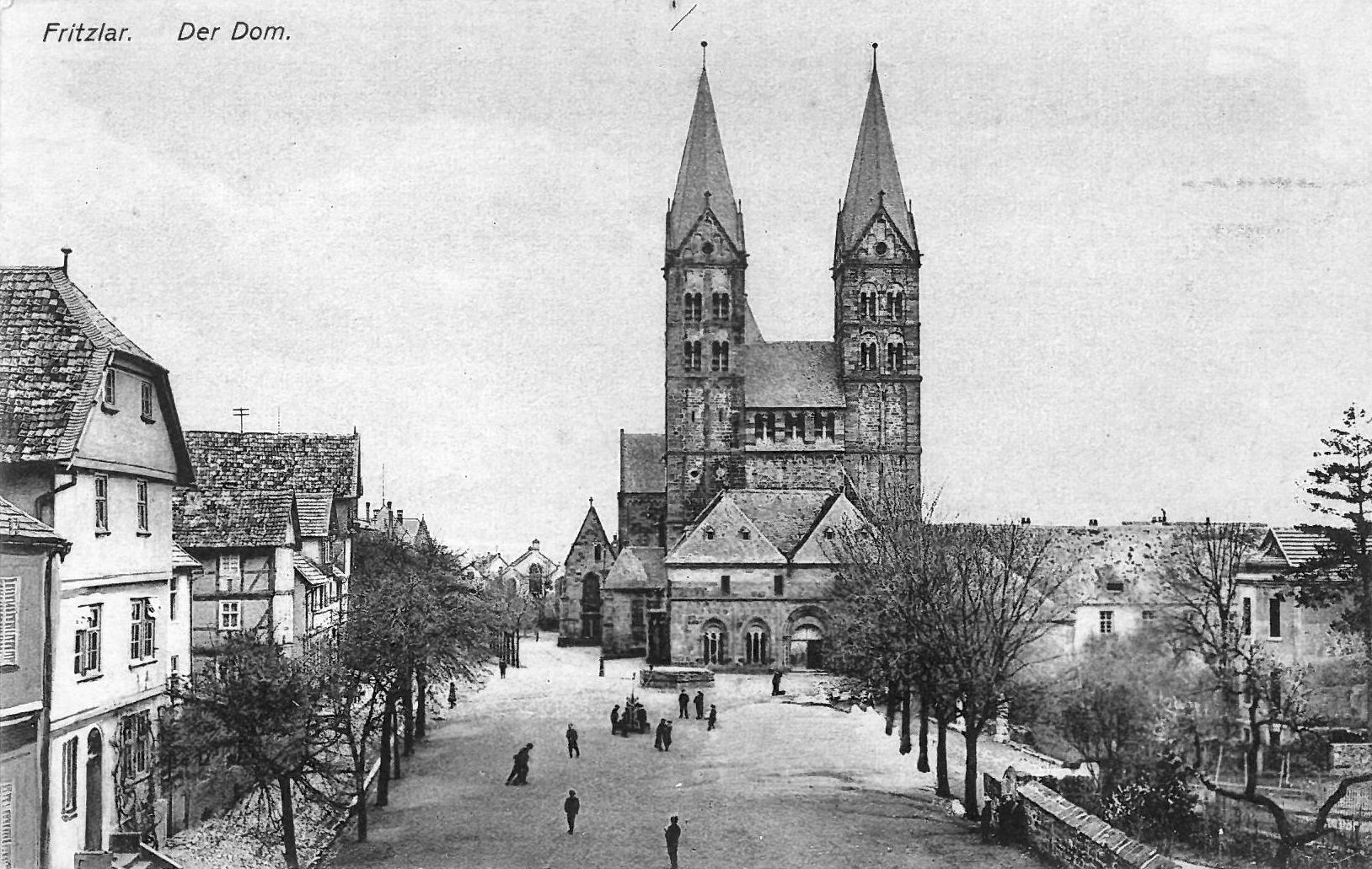
St.-Petri-Dom 1907
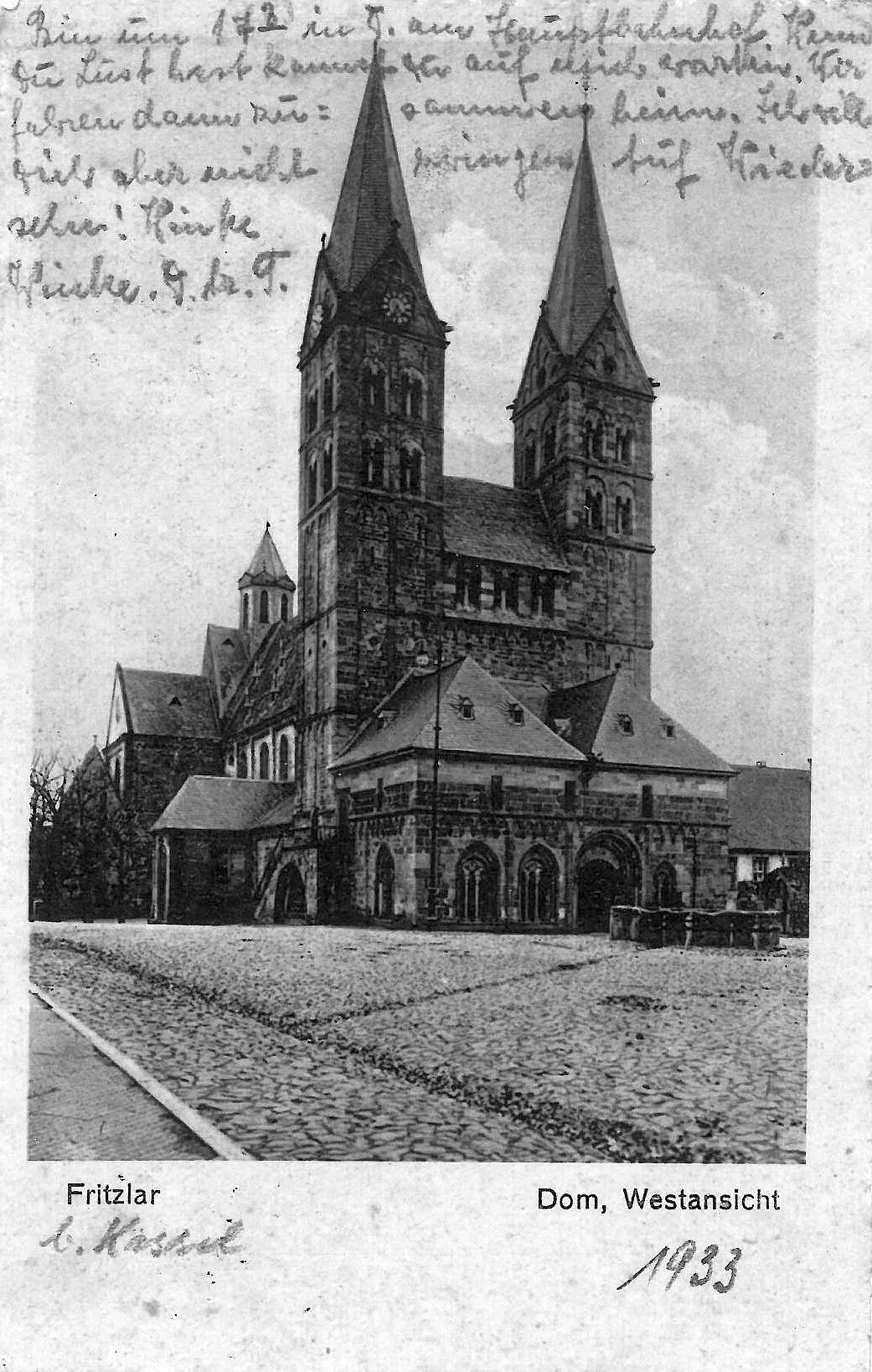
St.-Petri-Dom 1933
Bitte wählen Sie Ihre Sprache / Please choose your language







Spätromanischer Bau nach 1180, Krypta und unterer Teil der Türme um 1085, Südschiff mit Kreuzgang gotisch. Die Geschichte des Domes und der Stadt Fritzlar beginnt 723 mit der Fällung der Donareiche durch St. Bonifatius, dem Apostel der Deutschen. Bau einer ersten Kirche aus dem Holz der Eiche, Gründung eines Benediktinerklosters. 732 Weihe der Wigbert-Basilika, der ersten Steinkirche. Um 1000 Umwandlung des Klosters in ein Chorherrenstift. 1079 vollständige Zerstörung. Ab 1085 Bau einer romanischen Basilika in der Größe des heutigen Doms. Nach 1180 Einwölbung. Innere Ausstattung aus dem 12. bis 19. Jahrhundert. Domschatz, Dommuseum, Dombibliothek.

Late Romanesque building, erected after 1180, crypt and lower part of the towers c. 1085, the southern nave with the cloisters are in Gothic style. The history of the cathedral and the city of Fritzlar begin in 723 when the missionary St. Boniface felled a tree, dedicated to the Germanic deity Donar and holy to the population of this area, the so called “Donar’s Oak” (Donareiche). St. Boniface is known as the “Apostle of the Germans”. The first church in this place consisted of planks and beams from this oak and the foundation of a Benedictine monastery followed later. In 732 the Wigbert Basilica was consecrated as the first stone church. Around the year 1000 followed its conversion into a canon monastery. In 1079 the place suffered total destruction. From 1085 a Romanesque basilica in the size of the present cathedral was built here. Its interior decorations were added from the 12th to the 19th century. There is a cathedral treasure house, a cathedral museum, and a cathedral library.

Laatromaanse bouw na 1180, crypte en onderste deel van de torens rond 1085, zuidschip met kloostergang gotisch. De geschiedenis van de kathedraal en de stad Fritzlar begint in 723 met het kappen van de Donau-eik door de heilige Bonifatius, de apostel van de Germanen. Bouw van de eerste kerk van het hout van de eik, stichting van een benedictijnenklooster. 732 Inwijding van de Wigbertbasiliek, de eerste stenen kerk. Rond 1000 wordt het klooster omgezet in een kanunnikerij. Volledige verwoesting in 1079. Vanaf 1085 bouw van een romaanse basiliek ter grootte van de huidige kathedraal. Gewelven na 1180. Interieur van de 12e tot 19e eeuw. Kathedraal schatkamer, kathedraal museum, kathedraal bibliotheek.

Construite au style roman flamboyant après 1180 ; le crypte et la partie en bas des tours furent construits vers 1085, la nef du sud avec son cloître est du style gothique. L’histoire de la cathédrale et de la ville de Fritzlar commence en 723 avec l’abat du chêne voué à Donar, le dieu païen du tonnerre, par Boniface, l’apôtre des Allemands. Construction d’une première chapelle avec le bois de ce chêne, fondation d’un monastère de Bénédictins. En 732 consécration de la basilique Saint Wigbert, la première église en pierre. Vers 1000 transformation du monastère en chœur. En 1079 destruction totale. Dès 1085 construction d’une basilique à peu près dans les dimensions de la cathédrale de nos jours. Après 1180, la voûte fut construite. L’agencement intérieur date du 12e jusqu’au 19e siècle. Le trésor de la cathédrale, son musée et sa bibliothèque valent la visite.

Costruzione tardo-romanica dopo il 1180, cripta e parte inferiore delle torri intorno al 1085, navata sud con chiostro gotico. La storia della cattedrale e della città di Fritzlar inizia nel 723 con l'abbattimento della quercia del Danubio da parte di San Bonifacio, l'apostolo dei tedeschi. Costruzione della prima chiesa con il legno della quercia, fondazione di un monastero benedettino. 732 Consacrazione della Basilica di Wigbert, la prima chiesa in pietra. Intorno al 1000, il monastero viene trasformato in canonica. Distruzione completa nel 1079. Dal 1085, costruzione di una basilica romanica delle dimensioni dell'attuale cattedrale. Volteggiate dopo il 1180. Arredi interni dal XII al XIX secolo. Tesoreria della cattedrale, museo della cattedrale, biblioteca della cattedrale.

Construcción románica tardía posterior a 1180, cripta y parte inferior de las torres en torno a 1085, nave sur con claustro gótico. La historia de la catedral y de la ciudad de Fritzlar comienza en el año 723 con la tala del roble del Danubio por San Bonifacio, apóstol de los germanos. Construcción de la primera iglesia con la madera del roble, fundación de un monasterio benedictino. 732 Consagración de la basílica de Wigbert, la primera iglesia de piedra. Hacia el año 1000, el monasterio se convierte en canonjía. Destrucción completa en 1079. A partir de 1085, construcción de una basílica románica del tamaño de la catedral actual. Bóvedas después de 1180. Mobiliario interior de los siglos XII al XIX. Tesoro de la catedral, museo de la catedral, biblioteca de la catedral.